
Glaciers around the world are shrinking at an accelerating pace, but global statistics on ice loss often feel distant and abstract. A new interactive tool now makes the crisis more tangible by showing when individual glaciers could effectively disappear under different levels of global warming. From the Alps to the Himalayas and beyond, the Global Glacier Extinction Explorer allows anyone to examine the projected fate of specific ice bodies and understand how temperature pathways will shape mountain landscapes this century.
A New Way to Visualise Glacier Loss
Developed by researchers from ETH Zurich and Vrije Universiteit Brussel, the Global Glacier Extinction Explorer is grounded in peer-reviewed research published in Nature Climate Change. Unlike studies that focus primarily on total ice volume or regional mass loss, this work examines the disappearance of individual glaciers. Users can explore a world map, select a warming scenario, and see colour-coded projections for when each glacier is likely to fall below critical size or volume thresholds.
The tool defines a glacier as extinct when its area drops below 0.01 square kilometres—consistent with common inventory standards—or when its remaining volume falls below 1 percent of its initial value. These criteria capture the point at which an ice body ceases to function as a meaningful glacier. Projections draw on multiple global glacier models combined with climate simulations corresponding to temperature increases of 1.5°C, 2.0°C, 2.7°C and 4.0°C above pre-industrial levels. Results are presented as median extinction years along with uncertainty ranges.
Why Individual Glaciers Matter
Aggregate numbers—such as the total percentage of ice expected to vanish—can obscure the lived reality of glacier loss. A valley that loses its last glacier experiences profound changes in water availability, landscape character, tourism, cultural meaning and hazard patterns. By allowing users to zoom into familiar mountain regions, the explorer turns large-scale climate data into something geographically and emotionally specific.
Lead researcher Lander Van Tricht has noted that global figures often feel abstract. The interactive map lets people examine the glaciers they know and see how different warming trajectories would affect them. This localisation is particularly powerful in regions where glaciers are tightly linked to water security, identity and local economies.
Peak Extinction Mid-Century
The underlying research projects that the rate at which individual glaciers disappear will peak around the middle of this century. Under a 1.5°C warming pathway, roughly 2,000 glaciers could vanish each year around 2041. At 4°C of warming, the peak rate could reach approximately 4,000 glaciers per year in the mid-2050s. These rates far exceed current modelled losses and illustrate how the timing and intensity of warming influence not only how much ice is lost, but how quickly the world’s glacier population shrinks.
Even if warming is limited to 1.5°C, nearly half of today’s glaciers could disappear by 2100. Higher warming levels produce far more severe outcomes. In the European Alps, for example, only a small fraction of current glaciers are projected to survive to the end of the century under stronger warming scenarios. Some regions dominated by smaller, more responsive glaciers face the prospect of losing more than half their ice bodies within the next two decades.
Already Visible Losses
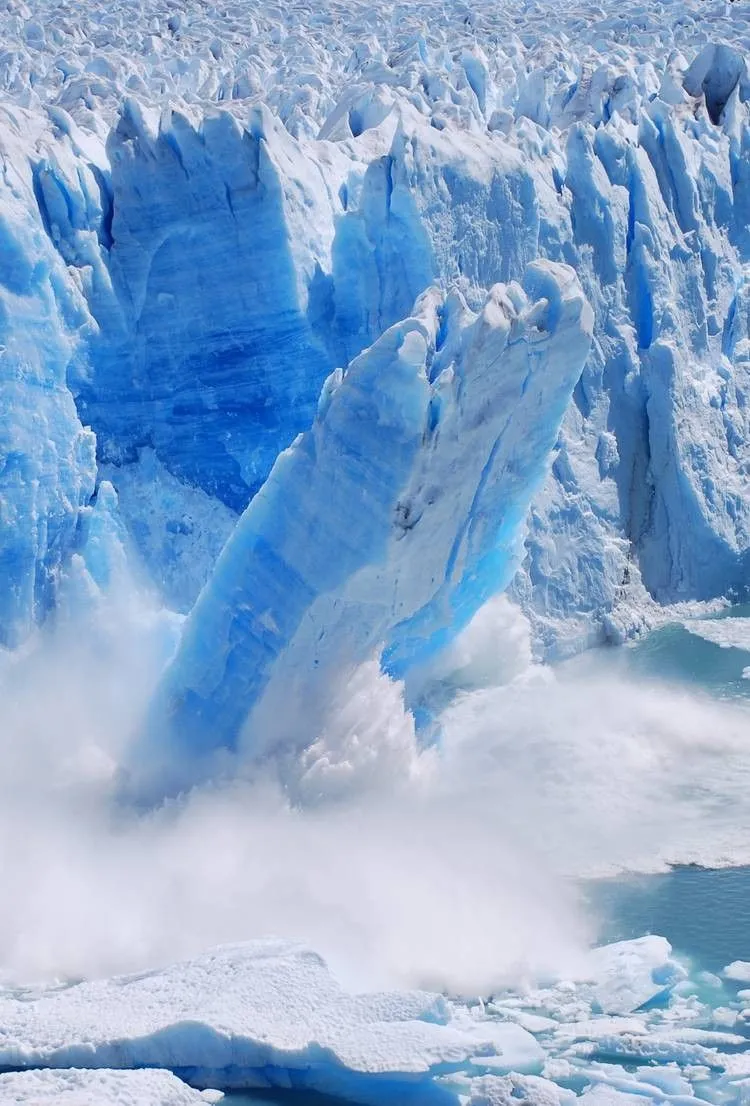
The projections are not purely theoretical. In Switzerland, glaciers such as Bella Tola have already been declared extinct in 2026 after shrinking to negligible remnants. Other Alpine glaciers are following similar trajectories. These early disappearances serve as tangible markers of a process that models indicate will intensify in the coming decades, particularly for smaller ice bodies at lower elevations.
Glacier extinction carries cascading consequences. Seasonal water supplies that communities and ecosystems have long relied upon become less reliable. Landscapes change as ice retreats and new terrain is exposed. In some regions, the loss of glacial ice can alter the frequency or character of hazards such as glacial lake outburst floods. Cultural and recreational relationships with mountain environments are also transformed.
Regional Differences and High-Mountain Asia
The fate of glaciers varies significantly by region. Smaller glaciers in the Alps, Caucasus, parts of the Andes and other ranges respond quickly to warming and are among the most vulnerable. High-Mountain Asia, which contains a large share of the world’s glaciers, plays a major role in global extinction patterns because of the sheer number of intermediate-sized ice bodies. The timing of peak loss in this region strongly influences the global picture.
For populations downstream of the Himalayas, Andes and other major ranges, glacier changes affect water resources for agriculture, hydropower and domestic use. While larger glaciers may persist longer, the progressive disappearance of smaller ones still alters hydrological regimes and increases uncertainty for water management.
The Importance of Every Fraction of a Degree
One of the clearest messages from the research is that the level of warming matters enormously. Limiting temperature rise to 1.5°C could preserve more than twice as many glaciers by 2100 compared with a 2.7°C pathway. Each additional increment of warming accelerates loss and reduces the number of surviving ice bodies. The explorer makes this relationship visible: switching between scenarios on the map reveals how dramatically the projected extinction dates shift.
This sensitivity underscores the continued relevance of mitigation. While some degree of future glacier loss is already locked in by past emissions and current warming, the difference between lower and higher emissions pathways remains substantial for the world’s remaining ice.
Making the Abstract Concrete
The Global Glacier Extinction Explorer does not merely present data; it changes how that data can be understood. By shifting attention from planetary totals to individual glaciers, it connects global climate change to specific places and communities. A user can examine a familiar Alpine valley, a Himalayan catchment or a glacier in the Andes and see a projected timeline that feels immediate rather than abstract.
In doing so, the tool serves both scientific and public communication purposes. Researchers gain a clearer picture of when and where glacier populations will thin most rapidly. The wider public gains a means of relating large-scale environmental change to landscapes they may know or care about. In an era when climate impacts can still feel distant, that localisation is a powerful contribution.
Glaciers have long served as visible indicators of climate change. The new explorer extends that role by showing not only that ice is disappearing, but when specific glaciers may cross the threshold into extinction under different possible futures. What it reveals is a world in which the mountain cryosphere will look profoundly different by the end of the century—and in which the choices made about emissions in the coming years will determine how many of today’s glaciers remain.
Read more – SmallBizSeo.org