
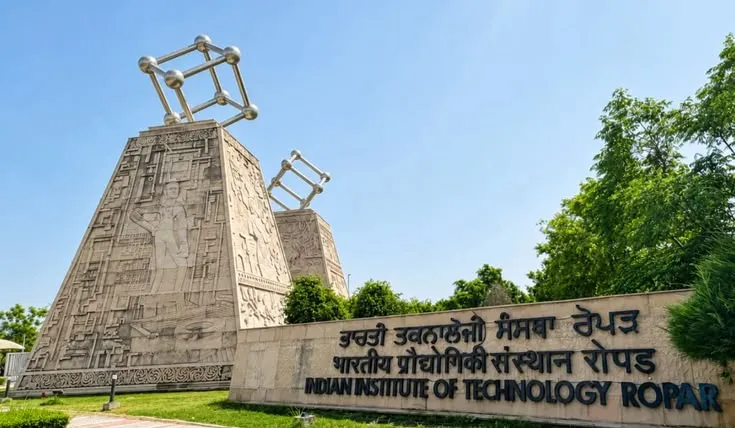
The Indian Institute of Technology Ropar has formalised a significant academic partnership with the Army Air Defence College in Gopalpur. Under a newly signed Memorandum of Agreement, IIT Ropar will award Master of Technology degrees in Defence Technology to selected Indian Army officers. The arrangement provides formal postgraduate accreditation to officers undergoing the Long Air Defence Course while expanding opportunities for research mentoring and access to advanced institutional facilities.
The agreement was signed by Professor Rajeev Ahuja, Director of IIT Ropar, and Lieutenant General Amit Rao, Commandant of the Army Air Defence College. It represents a concrete extension of earlier cooperation between the institute and the Indian Army and reflects a growing emphasis on integrating academic expertise with operational defence requirements.
Building on Existing Collaboration
The latest Memorandum of Agreement rests on a broader foundation established in December 2022. At that time, the Army Training Command, Integrated Headquarters of the Ministry of Defence (Army), and IIT Ropar signed a Memorandum of Understanding focused on academic and research cooperation. The new pact converts that framework into a structured degree pathway specifically for officers specialising in air defence.
By formalising the award of the MTech degree, the partnership elevates the Long Air Defence Course from a professional military training programme to one that also carries recognised postgraduate academic credentials. This dual recognition is intended to strengthen the technical depth of officers while aligning their education more closely with contemporary defence technology needs.
Mentorship, Research Guidance and Institutional Access
A central feature of the agreement is the nomination of IIT Ropar faculty members as mentors. These faculty will guide officers through their dissertations and research projects, ensuring academic rigour and exposure to current research methodologies. The mentoring arrangement is designed to bridge classroom learning with practical problem-solving relevant to air defence systems and related technologies.
Officers will also receive access to IIT Ropar’s laboratories and research infrastructure, subject to prior approval. This provision allows them to work with specialised equipment and experimental facilities that may not be readily available within purely military training environments. In addition, the officers will participate in seminars and lectures delivered by IIT Ropar faculty, offered in both online and offline formats to accommodate operational schedules.
The two institutions have further committed to jointly developing technological knowledge in areas of mutual interest. This collaborative element is expected to generate research outcomes that benefit both the academic community and the operational needs of the Army’s air defence formations.
Statements Reflecting Shared Objectives
Speaking at the time of the agreement, Professor Rajeev Ahuja described the partnership as a meaningful step in the institute’s ongoing engagement with the Indian Army. He noted that IIT Ropar’s faculty and infrastructure are now contributing directly to the technical education of officers who serve on the frontlines of national defence. He expressed the institute’s intention to deepen the collaboration in the years ahead.
The presence of senior figures associated with both institutions, including representatives linked to IIT Ropar’s Defence Research and Innovation Foundation, underscored the institutional priority given to the partnership. The foundation has played a coordinating role in advancing academic and research cooperation since the original 2022 understanding.
Significance for Defence Education and Capability Building
The decision to award an IIT MTech degree to serving Army officers carries several implications. First, it formalises a pathway for mid-career technical upskilling that combines military domain knowledge with the research culture of a premier engineering institute. Officers completing the programme will hold a credential that is widely recognised in academic and professional circles, potentially enhancing their ability to lead technology-driven projects within the service.
Second, the arrangement supports the broader national objective of strengthening indigenous defence technology capabilities. By exposing officers to advanced laboratories, faculty expertise and structured research projects, the programme can accelerate the identification and development of solutions tailored to operational challenges in air defence.
Third, the model of formal accreditation for existing military courses offers a template that other services and specialised training establishments may consider. It demonstrates how academic institutions and defence organisations can move beyond sporadic collaboration toward sustained, degree-linked partnerships.
Continuity with Earlier Initiatives
IIT Ropar has already established related engagement with other Army training establishments. An earlier agreement focused on officers associated with armoured formations and introduced an MTech programme oriented toward defence technology themes relevant to that domain. The new pact with the Army Air Defence College extends the same philosophy of academic-military integration to a different specialised branch, indicating a systematic expansion of the institute’s defence education footprint.
Across these initiatives, common elements include faculty mentoring, access to research facilities, joint knowledge development and the award of an IIT postgraduate degree. Together they illustrate a deliberate effort to embed advanced technical education within the professional development pathways of serving officers.
Looking Forward
The Memorandum of Agreement between IIT Ropar and the Army Air Defence College marks a practical advance in defence-oriented higher education. By converting professional military training into an accredited MTech pathway, the partnership equips officers with both operational insight and formal academic credentials. Faculty mentoring, laboratory access and joint research commitments further enrich the learning experience.
As the programme takes shape, its success will depend on the quality of interaction between mentors and officers, the relevance of research projects to real operational needs, and the seamless coordination between the academic calendar and military training schedules. If executed effectively, the collaboration can contribute meaningfully to the technical readiness of air defence personnel and reinforce the wider ecosystem of defence innovation in the country.
The agreement stands as a clear example of how premier technical institutions and the armed forces can work together to strengthen national defence capabilities through education and research.
Read more – theantutuscore.com