
A virtual private network, commonly known as a VPN, is a technology that creates a secure, encrypted connection over a less secure network such as the public internet. It allows users to send and receive data as if their devices were directly connected to a private network. Originally developed for secure remote access to corporate systems, VPNs are now widely used by individuals seeking greater privacy and protection while online. Understanding how a VPN works, what it can and cannot do, and its practical benefits helps users make informed decisions about when and how to use one.
What a VPN Actually Does
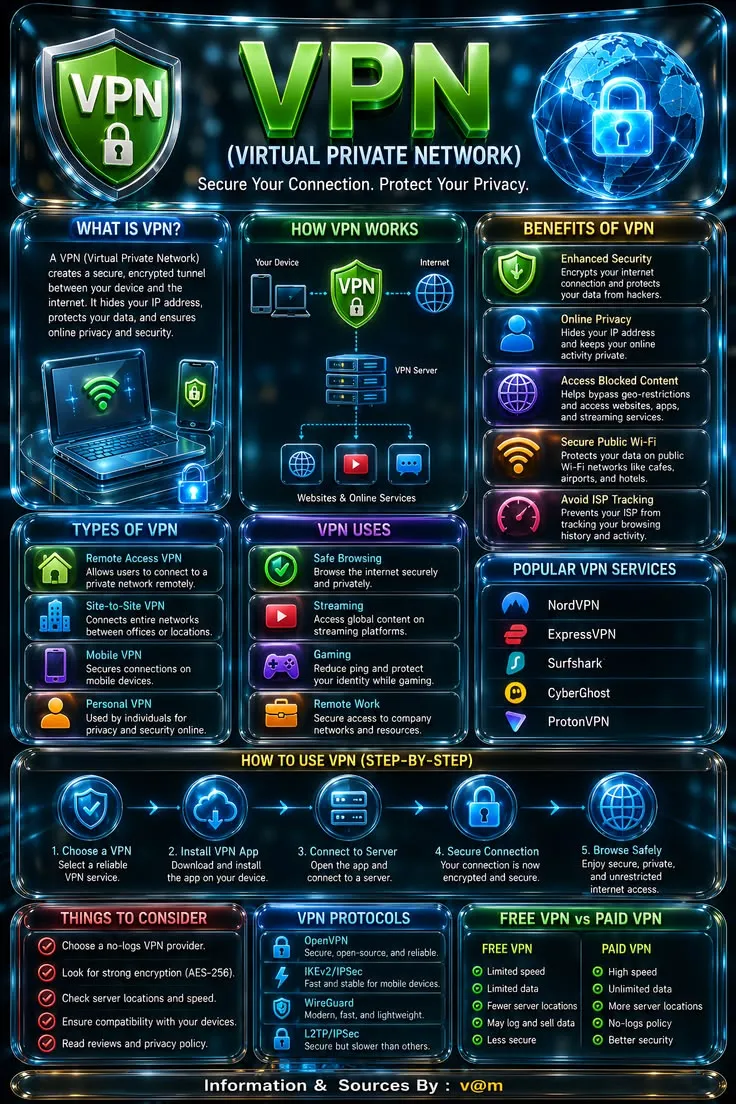
At its core, a VPN establishes an encrypted tunnel between a user’s device and a remote server operated by the VPN provider. All internet traffic from the device travels through this tunnel before reaching its final destination. Because the data is encrypted, it becomes unreadable to anyone who might intercept it along the way, such as operators of public Wi-Fi networks or other intermediaries.
In addition to encryption, a VPN masks the user’s real IP address. To websites and online services, the traffic appears to originate from the VPN server’s location rather than the user’s actual device. This combination of encryption and IP masking forms the foundation of the privacy and security benefits associated with VPNs.
How the Technology Works
When a VPN connection is activated, specialized software on the device communicates with the chosen VPN server using established protocols. These protocols handle authentication, encryption, and the secure transfer of data. Common approaches rely on strong encryption standards that scramble the information so that only the intended recipient—the VPN server and ultimately the destination—can decrypt it.
The process can be visualized as a protected pathway. Data leaves the device in encrypted form, travels through the public internet inside the tunnel, arrives at the VPN server where it is decrypted, and is then forwarded to the requested website or service. Return traffic follows the reverse path, remaining encrypted between the VPN server and the user’s device.
Different protocols offer varying balances of security, speed, and compatibility. Modern implementations prioritize robust encryption while aiming to minimize performance impact. The VPN application manages the technical details, making the process largely automatic once configured.
Key Security and Privacy Benefits
One of the most practical advantages is protection on public or untrusted networks. Coffee shops, airports, hotels, and other shared Wi-Fi environments can expose data to interception. A VPN encrypts traffic so that even if someone monitors the network, the content remains unreadable.
By masking the IP address, a VPN also limits the ability of websites, advertisers, and network operators to track browsing activity based on that identifier or to determine the user’s precise location. This can reduce certain forms of tracking and help maintain privacy in everyday online use.
For remote workers and organizations, VPNs enable secure access to internal resources. Employees can connect to company systems from outside the office while keeping the communication encrypted and isolated from the public internet. This use case remains one of the original and most important applications of the technology.
In some situations, a VPN can help access content or services that are restricted by geography, because the traffic appears to come from the location of the VPN server. Results depend on the specific service and the policies of both the content provider and the VPN service.
Important Limitations and Realistic Expectations
A VPN is a valuable tool, but it is not a complete privacy or security solution. The VPN provider can see the traffic that passes through its servers. Trustworthiness of the provider, including its logging policies and jurisdiction, therefore becomes critical. A poorly chosen service can introduce new risks rather than reduce them.
VPNs do not make users completely anonymous. Browser fingerprints, account logins, cookies, and other identifiers can still reveal information. They also do not protect against malware on the device itself, phishing attacks, or vulnerabilities in websites that are visited. Security remains a layered responsibility.
Performance can be affected. Routing traffic through an additional server and applying encryption may reduce connection speed, depending on server distance, network conditions, and the efficiency of the protocol used. Choosing servers that are geographically closer or using optimized protocols can mitigate this impact.
Finally, some networks and services detect and restrict VPN traffic. In those cases the connection may be blocked or require additional configuration.
Choosing and Using a VPN Responsibly
Selecting a reputable provider involves examining independent audits, clear privacy policies, the strength of encryption offered, and the jurisdiction in which the company operates. Features such as a kill switch (which blocks traffic if the VPN connection drops) and strong protocol support add practical value.
Once chosen, the VPN should be kept updated, used on trusted devices, and combined with other good security habits: strong unique passwords, multi-factor authentication where available, and caution with suspicious links or downloads. For organizational use, proper configuration, access controls, and monitoring are essential.
Practical Everyday Value
For individuals, a VPN offers meaningful protection when connecting from public networks, a degree of privacy from routine tracking, and flexibility in accessing online resources. For businesses, it supports secure remote work and protects sensitive communications. In both contexts, the technology works best when its capabilities and limits are clearly understood.
A VPN creates an encrypted tunnel, masks the user’s IP address, and helps safeguard data in transit. These functions address real risks present on today’s internet. Used thoughtfully as part of a broader approach to online security and privacy, it remains a practical and effective tool for many people and organizations. Understanding how it works allows users to apply it where it delivers the greatest benefit while remaining realistic about what it cannot accomplish alone.
Read more – thewhipp.com