
The University of Chicago is taking a deliberate step away from the technology-saturated classroom. Beginning with the 2026-27 academic year, its undergraduate Social Sciences Core sequences will operate largely as analog courses. Laptops, phones and other personal devices will be put away, artificial intelligence tools will be restricted for both students and instructors, and the emphasis will return to paper texts and face-to-face discussion.
The New Guidelines
According to guidance issued by the Social Sciences Collegiate Division, the Core sequences are now collectively designed to be taught without AI. Classrooms are to function as device-free spaces. Students are expected to read assigned works on paper and participate in guided conversations unmediated by screens. Recording of discussions and lectures is restricted. Assignments must be completed independently, without assistance from AI writing tools. Instructors are generally barred from using AI for grading, and course syllabi are to be prepared by human scholars.
The policy reflects what the division described as a strong consensus among sequence chairs and instructors: these particular courses are best understood as pedagogical settings that do not rely on artificial intelligence.
Limited exceptions exist. Faculty may seek approval to use technology for specific academic purposes, such as examining datasets or accessing certain library resources. Students with approved disability-related accommodations will be permitted appropriate device use. In general, however, the expectation is clear—devices stay in bags, set to silent.
Why the Social Sciences Core?
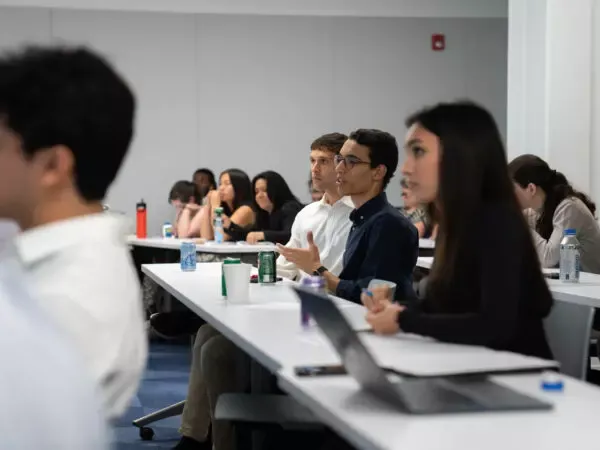
The University of Chicago’s Social Sciences Core consists of small, discussion-based sequences that students typically complete over three quarters. Classes are intimate, usually capped at around twenty students, and built around close reading of challenging texts and sustained conversation. Faculty argue that the presence of screens and the ready availability of AI tools can undermine the very skills the Core aims to develop: careful reading, independent thinking, listening, and the ability to change one’s mind through dialogue.
By removing devices, the division seeks to reduce distraction and restore full attention to the text and to fellow students. By restricting AI, it aims to ensure that students first learn to read, write and reason without technological dependence. The goal, as framed in the guidance, is to give students the freedom to think for themselves and to engage with ideas and with one another in good faith, face to face.
Broader Context at the University
The social sciences policy is not an isolated decision. Earlier in 2026, the University of Chicago Law School announced its own restrictions for first-year required courses. Those rules also limit electronic devices in the classroom and emphasize in-class examinations without internet access, with the aim of strengthening foundational critical thinking before students are taught to work with AI tools.
Together, the moves signal an institutional interest in protecting certain core educational experiences from the rapid encroachment of generative AI and constant connectivity. They do not represent a university-wide ban. Elective courses and other divisions retain greater flexibility, and faculty are still encouraged to experiment thoughtfully where appropriate.
The Wider Debate in Higher Education
Universities across the United States and beyond are grappling with similar questions. Some institutions have moved toward integrating AI into coursework, teaching students how to use the tools critically and responsibly. Others have tightened honour codes or invested in detection software. A smaller number are carving out deliberately low-tech or no-AI spaces, particularly in discussion-heavy humanities and social science courses.
Supporters of the Chicago approach argue that foundational skills must be secured before students lean on powerful external systems. Critics worry that strict bans may leave graduates less prepared for workplaces where AI is already commonplace, or that they risk appearing nostalgic rather than forward-looking. The University of Chicago’s position is that students should first become capable independent thinkers; learning to use AI well can come afterward.
Practical Implications for Students and Faculty
For students entering the Social Sciences Core in 2026-27, the classroom experience will feel different from many of their other courses. Note-taking will largely return to paper or approved non-connected methods. Preparation will centre on physical texts. Discussion will demand sustained attention without the option of quick online searches or private messaging.
Faculty will need to design assignments and assessments that do not invite AI substitution and to grade without relying on automated tools. The guidance leaves limited room for carefully validated experimentation, but the default remains human-centred teaching and evaluation.
Reasonable accommodations ensure that students who require technology for documented reasons are not excluded. The policy is framed as protecting the learning objectives of the Core rather than imposing technology for its own sake.
A Deliberate Pedagogical Choice
The decision at Chicago is less about rejecting technology wholesale and more about preserving a specific kind of educational encounter. In small seminars devoted to dense social and political texts, the presence of devices and the availability of AI can subtly shift the dynamic from collective inquiry to individual, mediated consumption. By choosing an analog model, the Social Sciences Collegiate Division is betting that deeper engagement, sharper listening and more original thinking will result.
Whether other departments or peer institutions follow a similar path remains to be seen. What is already clear is that the University of Chicago has drawn a distinct line for one of its signature undergraduate experiences. In an era when AI is rapidly becoming part of everyday academic life, the social sciences Core will ask students to put the tools aside, open a physical book, and talk to one another. The experiment begins in the coming academic year.
Read more – atechsslaash.com , BestMenuHub.com