
In today’s fast-paced world, self-care is no longer a luxury—it’s a necessity for maintaining physical vitality and mental resilience. A consistent self-care routine nurtures the body and mind, reducing stress, enhancing mood, and preventing burnout. Far from selfish, prioritizing self-care equips you to show up more effectively in all areas of life.
This comprehensive guide outlines a balanced, sustainable self-care routine grounded in practices that support holistic health. By integrating small, daily habits across physical, emotional, and mental domains, you can experience improved energy, better focus, emotional stability, and overall life satisfaction. Remember, self-care looks different for everyone—tailor it to your needs and lifestyle.
The Foundations of an Effective Self-Care Routine
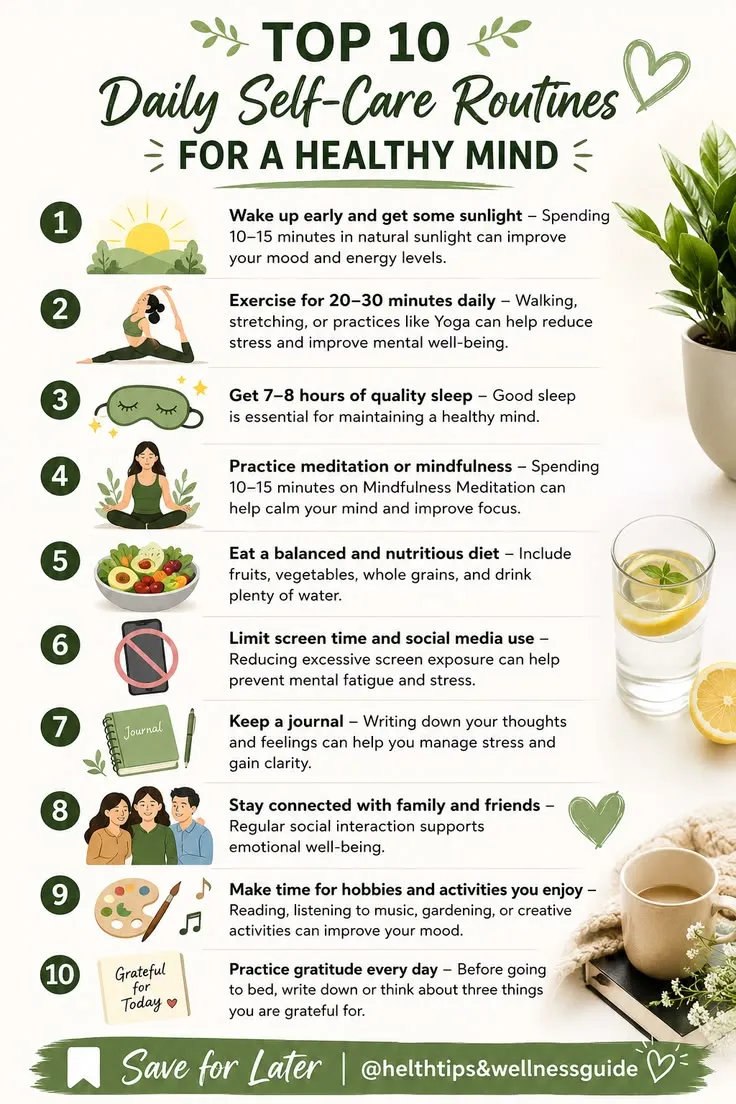
A strong self-care plan addresses interconnected pillars: physical activity, nutrition, sleep, mindfulness, and social/emotional connections. Start small to build sustainable habits rather than overhauling your life overnight. Layer practices—daily basics, weekly deeper activities, and occasional resets—for long-term success.
Consistency matters more than perfection. Track progress in a journal and adjust as needed, listening to your body’s signals.
Prioritizing Quality Sleep for Restoration
Sleep forms the cornerstone of self-care, directly impacting mood, immunity, cognitive function, and stress resilience. Aim for 7-9 hours nightly with a consistent schedule, even on weekends. Create a wind-down ritual: dim lights, avoid screens 30-60 minutes before bed, and maintain a cool, dark bedroom environment.
Poor sleep exacerbates anxiety and depression, while quality rest enhances memory, focus, and emotional regulation. Incorporate short power naps (10-20 minutes) when needed, but avoid disrupting nighttime patterns. Consistent sleep hygiene pays dividends in mental clarity and physical recovery.
Nourishing Your Body with Balanced Nutrition
What you eat profoundly affects energy levels, mood stability, and cognitive performance. Focus on whole foods: vegetables, fruits, whole grains, lean proteins, nuts, and healthy fats. A Mediterranean-style pattern rich in these elements supports brain health and reduces inflammation linked to mood disorders.
Stay hydrated—dehydration can mimic fatigue or irritability. Limit ultra-processed foods and excess sugar, which may contribute to energy crashes and heightened anxiety. Meal prep weekly for balanced options, and practice mindful eating to foster a healthier relationship with food. Small changes, like adding a serving of vegetables to each meal, yield significant benefits over time.
Incorporating Movement and Exercise
Regular physical activity ranks among the most evidence-based self-care practices for mental health. Aim for at least 150 minutes of moderate activity weekly—brisk walking, cycling, dancing, or yoga. Even short daily movement sessions reduce symptoms of anxiety and depression while boosting endorphins and self-esteem.
Choose enjoyable activities to ensure adherence: outdoor walks for nature exposure, strength training for confidence, or group classes for social connection. Exercise also improves sleep quality and cardiovascular health, creating a positive feedback loop for overall well-being. Start with 10-15 minutes daily if you’re building the habit.
Mindfulness and Stress Management Practices
Mindfulness techniques like meditation, deep breathing, or journaling calm the nervous system and enhance emotional awareness. Dedicate 5-10 minutes daily to focused breathing or guided meditation to lower cortisol levels and improve concentration.
Gratitude practices—listing three things you’re thankful for each day—shift perspective and foster positivity. Progressive muscle relaxation or gentle yoga further releases physical tension tied to stress. These tools build resilience, helping manage daily pressures more effectively.
Emotional and Social Self-Care
Nurture connections by scheduling time with supportive friends or family. Social interaction combats isolation, a known risk factor for mental health challenges. Hobbies, reading, or creative pursuits provide joy and accomplishment outside work responsibilities.
Set boundaries to protect your energy—learn to say no without guilt. Unplug from devices periodically for digital detoxes, reducing comparison and overstimulation. Self-compassion practices, such as positive self-talk, counteract inner criticism and promote emotional balance.
Building and Sustaining Your Routine
Morning Anchor: Hydrate, move gently (stretch or walk), eat a nutritious breakfast, and practice 5 minutes of mindfulness or gratitude.
Midday Reset: Take a short walk, enjoy a balanced meal mindfully, or do deep breathing during breaks.
Evening Wind-Down: Prepare a healthy dinner, limit screens, engage in a relaxing hobby, and maintain a consistent bedtime.
Weekly Enhancements: Schedule longer exercise sessions, social meetups, nature time, or a relaxing bath. Monthly, review what’s working and explore new activities like massage or a hobby class.
Use reminders or habit-tracking apps initially. Pair new habits with existing ones (e.g., meditate after coffee) for easier integration. Be patient—habits form gradually.
Overcoming Common Challenges
Busy schedules often derail self-care. Start micro: one 10-minute walk or breathing exercise daily. Address guilt by reframing self-care as essential maintenance. If motivation dips, revisit your “why”—better energy for family, sharper focus at work, or reduced anxiety.
Seek professional support if needed—therapists or coaches can personalize plans. Track mood and energy to notice improvements, reinforcing commitment.
Long-Term Benefits of Consistent Self-Care
A dedicated routine yields compounding rewards: lower stress and anxiety, improved mood and resilience, better physical health markers, enhanced relationships, and greater life satisfaction. It supports preventive health, reducing risks of chronic conditions while fostering a positive self-relationship.
Individuals who prioritize self-care often report higher productivity, creativity, and emotional stability. It’s an investment yielding returns across all life domains.
Conclusion
Crafting a self-care routine for physical and mental health is a powerful act of self-respect and proactive wellness. By focusing on sleep, nutrition, movement, mindfulness, and connection, you build a foundation for thriving rather than merely surviving.
Begin today with one or two habits that resonate most. Consistency, compassion, and flexibility will help your routine evolve with you. Embrace self-care as a lifelong practice—your mind and body will thank you with greater vitality, clarity, and joy.