
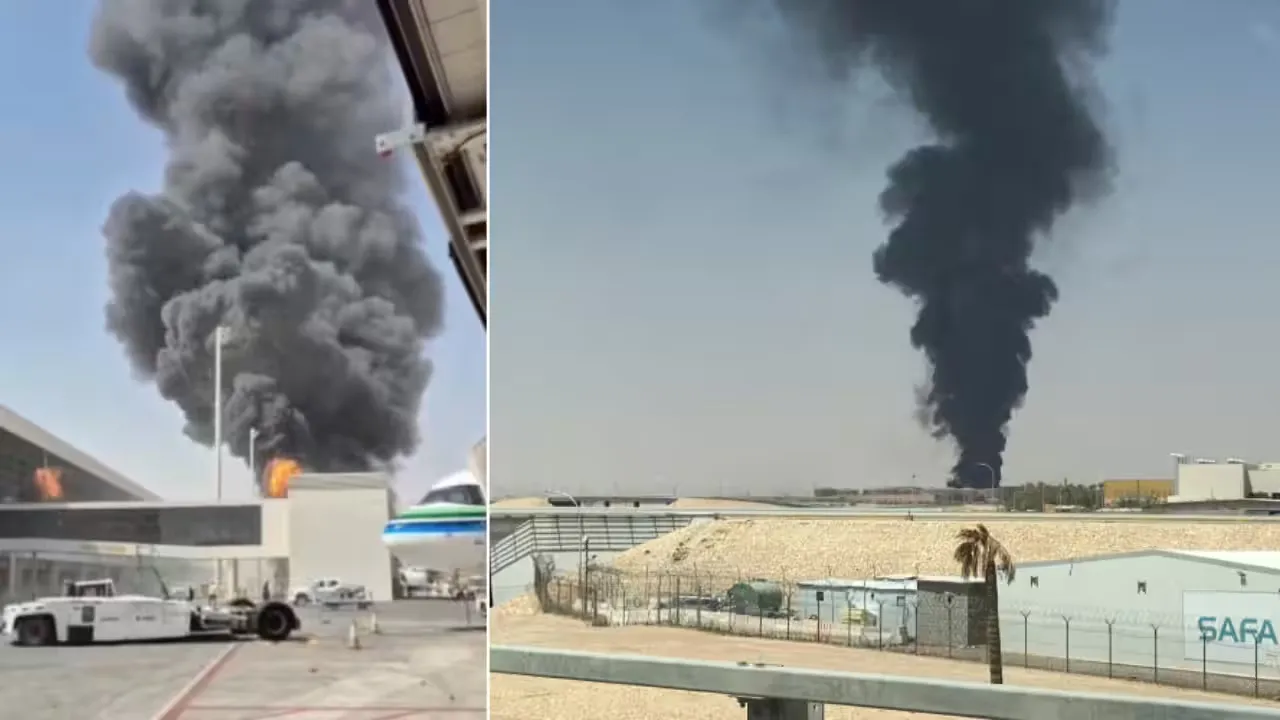
A projectile struck Terminal 4 at King Khalid International Airport in Riyadh on Sunday, sparking a fire and causing injuries, according to Saudi authorities and the Saudi-led coalition. The incident occurred one day after a more severe attack on the same airport that killed 13 people and wounded more than 300 others. Video footage circulating from the earlier strike showed travellers, including Umrah pilgrims preparing to board flights, reacting with panic as the terminal was hit.
Saudi civil aviation authorities confirmed an unspecified number of injuries from the Sunday incident and said assessments of the damage were continuing. The coalition reported that air defences also intercepted a cruise missile in the vicinity of the airport. Later on Sunday, the civil aviation authority confirmed a separate strike on King Fahd International Airport in Dammam in the Eastern Province. Operations at the Riyadh airport remained suspended, with the closure extended amid safety inspections.
Sequence of Recent Incidents
The Saturday attack marked the deadliest strike on Saudi soil in more than a decade. Victims included four Saudi citizens along with nationals from Bangladesh, the United States, Egypt, Jordan, Palestine, Syria and Sudan. An Indian national injured in that incident later died. The airport, a major hub serving the Saudi capital, saw all flights diverted or cancelled, leaving passengers stranded and prompting travel advisories from several countries.
Footage released by Saudi state media captured the moment of impact during the Saturday strike. Travellers waiting near boarding gates, many of them Umrah pilgrims heading toward Islam’s holiest sites, were seen scrambling as a bright flash occurred and parts of the structure appeared affected. The scenes underscored the vulnerability of civilian infrastructure during periods of heightened regional tension.
Yemen’s Houthi movement claimed responsibility for the Saturday attack and stated that it had also targeted the Dammam airport as well as facilities linked to Saudi Aramco. In a statement, the group renewed warnings to airlines, airport workers and travellers against using Saudi airports and airspace, describing them as operational areas while excluding the airports serving the holy cities of Mecca and Medina.
Impact on Travel and Pilgrims
King Khalid International Airport is a critical gateway for both domestic and international passengers, including large numbers of pilgrims performing Umrah. October typically sees increased traffic as cooler weather encourages travel to the holy cities. The successive strikes forced the suspension of operations, disrupted flight schedules across the region and created uncertainty for thousands of travellers. Passengers were advised to contact their airlines before attempting to reach the airport, and many were seen waiting outside nearby transport hubs with their luggage.
The Dammam strike further complicated aviation in the Eastern Province, a key industrial and energy region. Flight-tracking data showed delays and cancellations at that airport as well. Saudi authorities emphasised that damage assessments and safety checks were under way at both facilities.
Schools in Riyadh shifted to remote learning for several days as a precaution, reflecting broader concerns about security in the capital. Conferences planned in the city were reported to be proceeding, according to Saudi officials, but the overall climate of uncertainty affected daily life and commercial activity.
Regional Context and Responses
The incidents form part of an escalation in the long-running conflict involving the Houthis in Yemen and the Saudi-led coalition that supports the internationally recognised Yemeni government. The Houthis have conducted a series of attacks on Saudi airports in recent days, highlighting ongoing challenges in air defence and the risks to civilian targets.
Saudi officials described the Saturday attack as a serious violation targeting civilians and airport staff. International reactions included condemnations and expressions of concern. The United States and other countries monitored the situation closely, with some governments issuing travel warnings for Saudi Arabia. Discussions about possible broader responses continued in diplomatic and security circles.
The successive strikes on major airports have raised questions about the protection of critical civilian infrastructure in the region. Airports serve not only commercial aviation but also the movement of pilgrims, workers and families. Disruptions of this scale affect livelihoods, religious travel and regional connectivity.
Looking Ahead
As authorities complete damage assessments and restore safe operations, the focus remains on protecting passengers and staff while addressing the underlying security threats. The presence of Umrah pilgrims among those affected underscores the human dimension of the violence. Families of the deceased and injured continue to receive support, and embassies have coordinated assistance for their nationals.
The events of the past week illustrate how conflicts in one part of the region can rapidly affect civilian life elsewhere. Continued monitoring of the security situation, clear communication with travellers and coordinated international efforts will be essential in the coming days. Saudi aviation authorities have prioritised safety inspections before fully resuming services, aiming to restore confidence in the country’s major air hubs.
The strikes have left a lasting impact on those who experienced the chaos firsthand and on the broader community that relies on these airports for essential travel. As the region navigates this period of heightened tension, the protection of civilian spaces remains a central concern for governments and international organisations alike.
Read more – brandownerdetail.com