
A difference of opinion within the government over the documentation of a key meeting on caste enumeration has come to light, with the Social Justice Ministry successfully seeking changes to an official note prepared by the Registrar General’s office. The episode highlights the careful wording and institutional sensitivities surrounding preparations for the inclusion of caste data in the forthcoming census exercise.
The Meeting and the Original Note
The meeting in question was chaired by Registrar General of India Mrityunjay Kumar Narayan. It was attended by Additional Registrar General Sunil Kumar, Joint Secretary from the Ministry of Social Justice and Empowerment Shailendra Kumar, and other officials. During the discussion, Ministry representatives indicated willingness to share the list of Other Backward Classes maintained under the relevant constitutional framework for use in the caste enumeration process.
On June 8, the Registrar General’s office circulated a four-paragraph note summarising the meeting. According to sources familiar with the document, the note recorded that Ministry officials had informed the gathering that there was no constitutional mandate to maintain a caste list and that, therefore, no such list was available with them. The note went on to conclude that, in the absence of any list of castes, enumeration in the census might not be possible using a pre-defined list in the questionnaire.
Ministry’s Objection and Revised Version
Officials in the Social Justice Ministry viewed the language of the original note as problematic. They believed the wording placed the onus for the absence of a pre-defined list onto the Ministry and could be interpreted as the Ministry declining to support the exercise. One official described the choice of words as creating a “trap.”
On June 11, the Ministry forwarded an amended version of the note to the Registrar General’s office. The revised text stated that, as mandated by the Constitution, the Ministry maintains the List of Scheduled Castes and the Central List of Other Backward Classes. It clarified that no separate list of “castes,” beyond the Scheduled Caste list and the Central List of Other Backward Classes, is required to be maintained by the Department.
The revised note further recorded that the list of Scheduled Castes, comprising 1,258 entries, had already been shared with the Office of the Registrar General of India in a letter dated September 25, 2025. It added that the Central List of Other Backward Classes, containing nearly 2,483 entries, would be provided if required.
Acceptance of the Changes
On June 30, the Registrar General’s office accepted the revised notes. The sequence of events—circulation of the original summary, formal objection and submission of an alternative draft by the Ministry, and eventual acceptance of the corrected version—illustrates the importance both sides attached to the precise official record of the discussion.
Requests for comment from the Registrar General and the Ministry Secretary on the matter did not receive responses at the time the developments became public.
Broader Context of Caste Enumeration
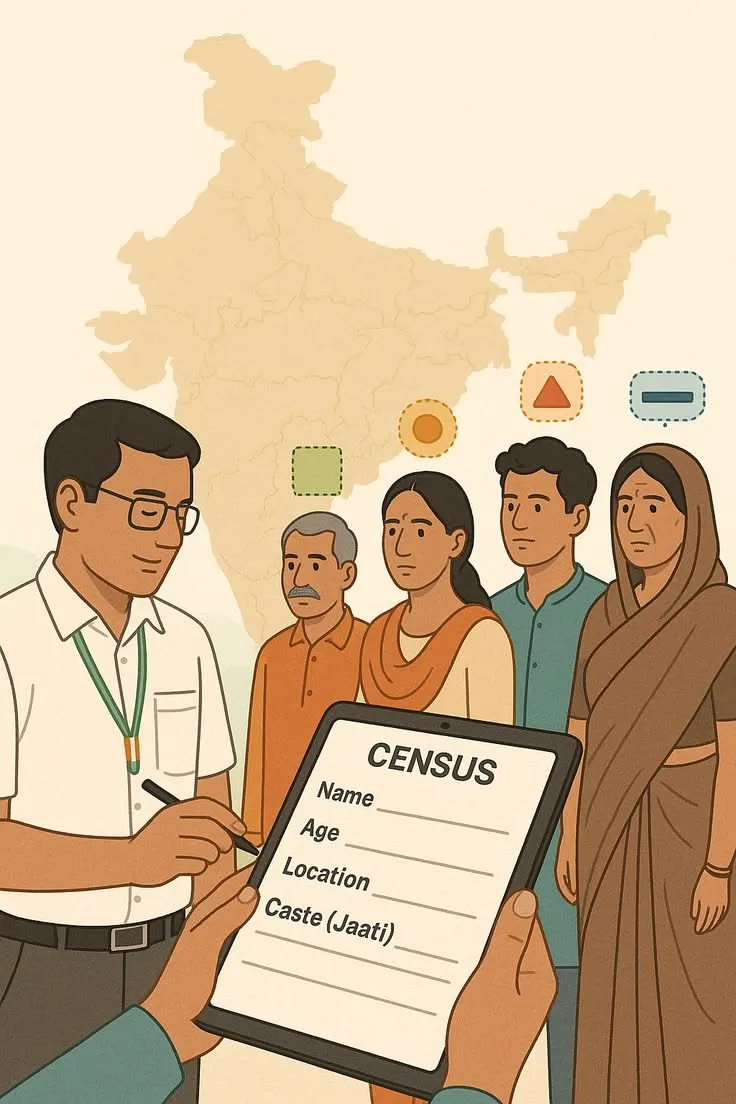
The discussion forms part of the preparatory work for the next census, in which caste enumeration is scheduled to take place alongside the population count. A government notification has indicated that the population enumeration phase, including the caste component, is planned for February of the following year.
The inclusion of caste data marks a significant departure from the practice followed in post-Independence censuses, which had limited such recording largely to Scheduled Castes and Scheduled Tribes. The decision to expand the scope has involved detailed consultations between the census authorities and the ministries that maintain the relevant statutory lists.
The exchange over the meeting note underscores the administrative complexity of translating a policy decision into operational details. Questions about which lists exist, who holds them, and how they can be used for enumeration require careful coordination. Even small differences in the official record of discussions can carry implications for how responsibilities are later understood.
Institutional Sensitivities
The Ministry’s insistence on revising the note reflects a desire to ensure that its constitutional role is accurately reflected. By maintaining the Scheduled Caste list and the Central List of Other Backward Classes, the Ministry operates within a defined mandate. The revised wording sought to make that distinction clear and to avoid any suggestion that the Ministry was unable or unwilling to assist with the lists it does maintain.
For the Registrar General’s office, which is responsible for the overall design and conduct of the census, the initial note appears to have sought to establish whether a comprehensive, ready-to-use caste list existed that could be incorporated into the questionnaire. The subsequent acceptance of the Ministry’s version indicates a willingness to correct the record once the objection was raised.
Looking Ahead
As preparations for the census continue, the episode serves as a reminder that the implementation of caste enumeration involves more than a high-level policy announcement. It requires alignment between different arms of government on technical and legal points, including the nature of existing lists and the manner in which information will be collected and later processed.
The revised note now stands as the agreed summary of the meeting. With the Scheduled Caste list already shared and the Other Backward Classes list available on request, the administrative groundwork for incorporating these categories into the enumeration process has been clarified. The larger exercise of conducting a nationwide caste count, however, will still involve substantial operational challenges once field work begins.
The internal exchange over the wording of a single meeting note reveals the care with which officials are approaching the subject. In a matter as sensitive and consequential as caste enumeration, the precise recording of institutional positions has itself become an important part of the preparatory process.
Read more – thenumberinfo.com