
For decades, one of the most accessible routes into the Indian film industry has been work as a junior artiste. Standing in a crowd, filling a marketplace, forming a battlefield or packing a stadium has given countless aspiring performers their first on-set experience, a modest daily wage and a foothold in an otherwise closed world. That entry point is now under pressure. Filmmakers are increasingly turning to artificial intelligence and computer-generated imagery to create large crowd scenes with far fewer real people on set.
How Crowd Scenes Are Changing
Traditional crowd work required hundreds of junior artistes. Each person needed costumes, transport, meals, make-up and coordination. The logistics were expensive and time-consuming. Advances in CGI and, more recently, AI-driven crowd multiplication have altered the equation. A production can now shoot a smaller group of real performers and digitally expand them into hundreds or thousands of figures that appear to move, react and fill the frame.
Industry practitioners have described situations in which only about 20 per cent of a large crowd is physically present, with the remaining 80 per cent generated digitally. In certain sequences, this approach can cost less than hiring several hundred junior artistes for the same visual result. Films across languages have already employed versions of the technology for battle scenes, public gatherings and background populations.
The economic logic is straightforward. Reducing the number of people on set lowers expenditure on wages, catering, costumes and management. It also shortens shooting schedules and reduces the complexity of managing large groups in restricted locations. For producers working under tight budgets or ambitious visual requirements, the appeal is clear.
The Junior Artiste’s Place in the Ecosystem
Junior artiste work has rarely been glamorous or well paid. Yet it has performed several important functions. It provided daily or short-term income for people trying to sustain themselves in expensive cities while auditioning or networking. It offered practical exposure to set etiquette, camera positions and the rhythm of filmmaking. For some, it became a long-term livelihood; for others, it was a temporary bridge toward speaking roles or technical jobs.
Because the work required little formal training or industry connection, it remained one of the few relatively open doors. Reducing the volume of such opportunities narrows that door. When a scene that once employed 300 people now needs only 60, the other 240 lose a day’s work and the cumulative effect across multiple productions becomes significant.
Wider Pressures on Supporting Talent
The shift toward AI-assisted crowds does not occur in isolation. Junior artistes and technicians have already reported irregular work, delayed payments and shrinking budgets. Low-budget digital content and vertical formats have created some alternative employment, but rates are often lower and payment security weaker. When traditional film and high-end streaming productions also reduce headcounts through technology, the overall demand for background performers contracts further.
Art directors and other crew members have noted that AI tools are sometimes used to replace or reduce physical set work as well. The pattern is consistent: tasks that can be approximated digitally at lower cost are the first to be scaled back. Background performance, being largely non-speaking and visually distant from the camera, is especially vulnerable.
Limits of the Technology
AI-generated crowds are most effective when figures remain at a distance or in motion where individual detail is less critical. Close-ups, complex interactions, emotional reactions and scenes requiring precise eye-lines or physical contact still depend on real performers. Directors and cinematographers continue to value the unpredictable energy that a live group can bring. For the time being, therefore, the technology supplements rather than completely eliminates human crowds.
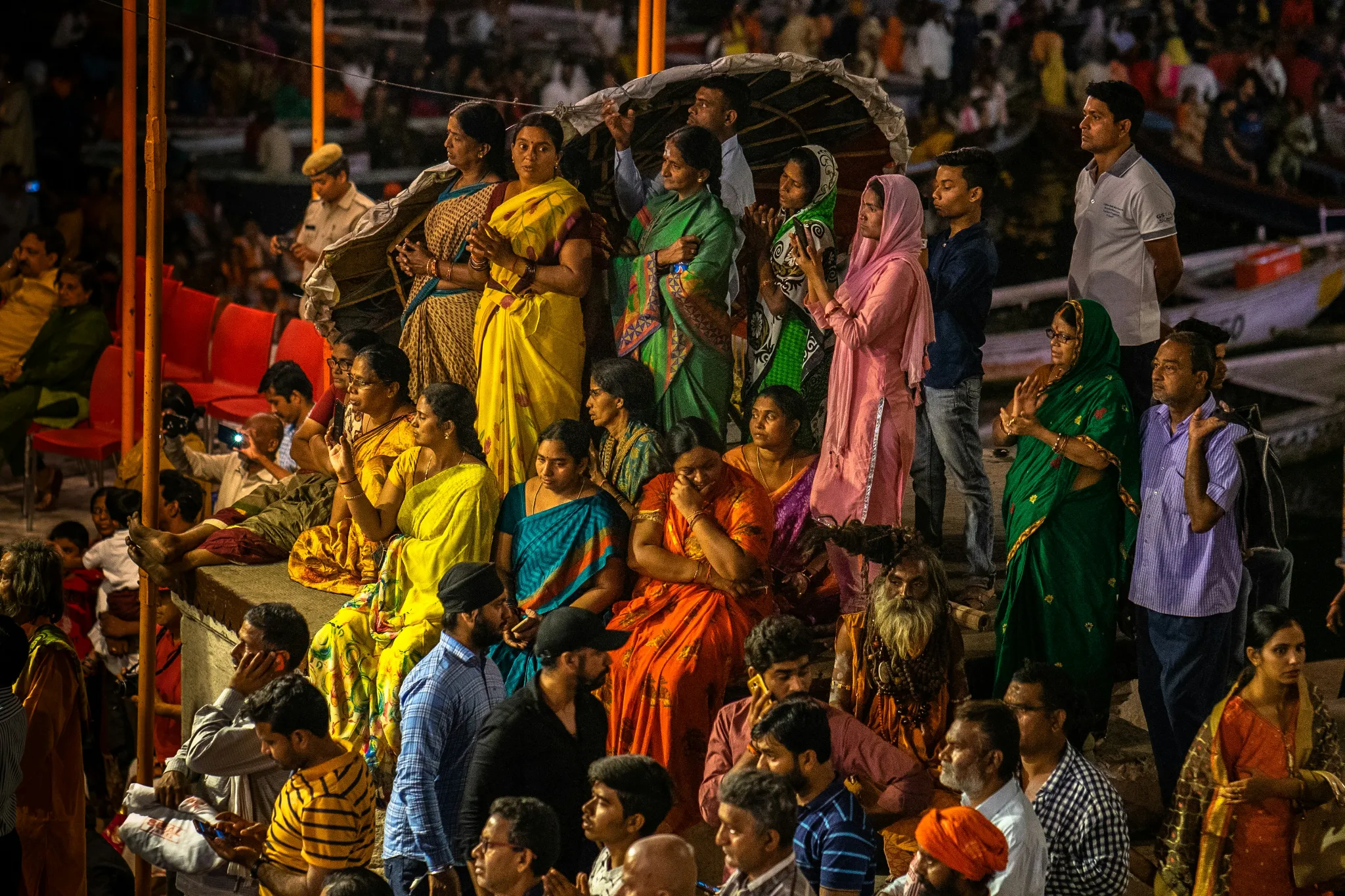
Nevertheless, the threshold of acceptability is rising. As algorithms improve at simulating natural movement, clothing physics and varied body types, the range of scenes that can be convincingly populated by digital doubles expands. What begins as a cost-saving measure for epic sequences can gradually extend into smaller gatherings and everyday backgrounds.
Industry Perspectives
Some filmmakers and visual-effects professionals present the tools as liberating. They allow ambitious scale on constrained budgets and free creative energy for storytelling rather than logistics. Others caution that an over-reliance on synthetic backgrounds risks flattening the texture of the image and distancing the audience from the human reality of the scene.
For junior artistes themselves, the conversation is more immediate. Work that once provided steady, if modest, income is becoming less frequent. Unions and representative bodies have begun to monitor the trend, though formal protections specific to AI displacement in background performance remain limited. The absence of strong contractual safeguards leaves many daily-wage performers exposed to sudden reductions in demand.
An Entry Point Under Strain
The Indian film industry has always been difficult to enter. Talent, persistence and personal networks matter, yet the sheer volume of background roles created a parallel pathway that required mainly availability and endurance. As that volume declines, the industry risks becoming even more closed at the lowest rung.
This does not mean junior artistes will vanish overnight. Large productions will continue to need real bodies for certain shots, and smaller films may still rely on traditional methods. The concern lies in the cumulative reduction of opportunities and the message it sends to newcomers: the first step is becoming harder to find.
Balancing Efficiency and Access
Technology that lowers costs and expands visual possibilities is unlikely to be abandoned. The practical question is whether the industry can adopt these tools while preserving some of the accessible work that has historically sustained aspiring talent. Transparent reporting of how many real performers are used, fairer distribution of remaining background opportunities, and investment in training that helps junior artistes move into other roles could mitigate the impact.
For now, the trend is clear. Scenes that once depended on hundreds of people standing under lights for hours can be achieved with a fraction of that number and a digital multiplier. The visual result may satisfy the camera. The human cost is measured in the reduced number of first jobs, daily wages and entry points that the film industry has long offered to those standing at its edges, waiting for their moment in the crowd.
Read more – Instantdua.com